Welcome!

About us:
In progress...

Wednesday, March 30, 2016

In class 3/28/16

In class, we finished our notes on logarithmic functions. In our notes we learned what "e" is (e=2.7182818284509...). We compared "e" to pi and learned how to use "e" in an equation. After finishing our notes, we did some practice problems that had to do with what we had just learned in our notes. We were also assigned two IXL's. These are my copies of the notes and the practice problems.

Notes:

Practice Problems:


Tuesday, March 29, 2016

3-29-16 Tuesday bisquits

Today in class we basically just reviewed for our test. Math Math Math Math Math Math Math Math
 Math Math Math Math Math Math Math Math Math Math Math Math Math Math Math Math Math Math Math MathMath Math Math MathMath Math Math MathMath Math Math MathMath Math Math Math


Wednesday, March 23, 2016

3/23/16

Objectives of Today's Class: 
Investigate logarithmic functions 

-a logarithmic functions is the inverse of an exponential function


http://www.sosmath.com/algebra/logs/log4/log4.html

(see Summer's post for information on the first side of the notes)

- - - - - - - - - - - - - - - - - - - - - - - - - - - - - - - - - 

THE SECOND PAGE OF NOTES…

First, we evaluated how to apply logarithms. Some examples included…

a) log39
To do this problem, you can rewrite it as 3^x=9 and then you just have to figure out what number goes in for x. In this case, x would equal 2 because 3 squared equals 9. This is one of the simpler problems. Now for a more difficult problem…

d) log48
Write it as 4^x=8. Then, you make the bases equal. In this case, we can set them as 2. So it would look like 2^2x=2^3. Then you would set up the exponents like an algebra problem and solve. So, 2x=3, divide 2 on each side and you get that x= 2/3. 

Second, we looked at common logs and how to solve/evaluate them. For example…

log 100 would equal 2 because 10 squared equals 100

log 1 would equal 0 because the only power that 10 could go to to equal 1 is 0

- - - - - - - - - - - - - - - - - - - - - - - - - - - - - - - - -
Remember…

Common log= log base 10 

10^x=y is the same thing as log10y=x 

Ask yourself: 10 to what power will give you x?


Class Wed. 3/23 & Symbaloo

3/23/16

At the beginning of class (the first 15 minutes) we got the chance to record about one color of the symbaloo links we are doing about logarithms. In case you missed it, we are going to be taking the first few minutes of class to do one color, and one is going to have to be done over the weekend. The grade is going to go in Wednesday of next week as a small quiz grade. Below is one of the symbaloo links researched. 

After that, we did notes on investigating logarithmic functions. Mrs. Hatfield made an analogy that an logarithm is like translating English to Spanish and Spanish to English. You take the reflection of the equation. Logarithms they are inverses that reverse the process. With them being inverses the domains and ranges switch and one asymptote.


Please see Erin's blogpost for the second page of notes! :)

In class tuesday, we learned about the real life implications of logarithms. We watched a video about the power of tens that showed how massive our universe is! We then had to find real life examples of where logarithms are used.

One example that I found was decibels.

3/22/16

In class on Tuesday, March 22 we were introduced to logarithms.  We watched a mind-blowing video called "The Powers of Ten" (https://www.youtube.com/watch?v=0fKBhvDjuy0&noredirect=).


After that we researched real world examples of logarithms.  One I researched was about The Richter Scale that is used to measure earthquakes.

Tuesday, March 22, 2016

Today, (By today, I mean 3/21/16) we did some practicing with logarithmic equations with like bases. This picture shows a good example on how to navigate what to do if you have multiply your exponents.

Thursday, March 17, 2016

Stations

Apparently I never posted about the stations we did when we first started regressions and exponential decay and growth, and got it put in as a missing grade, as a result, I am posting about it now. 

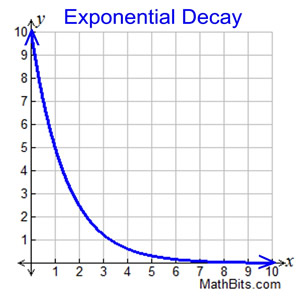
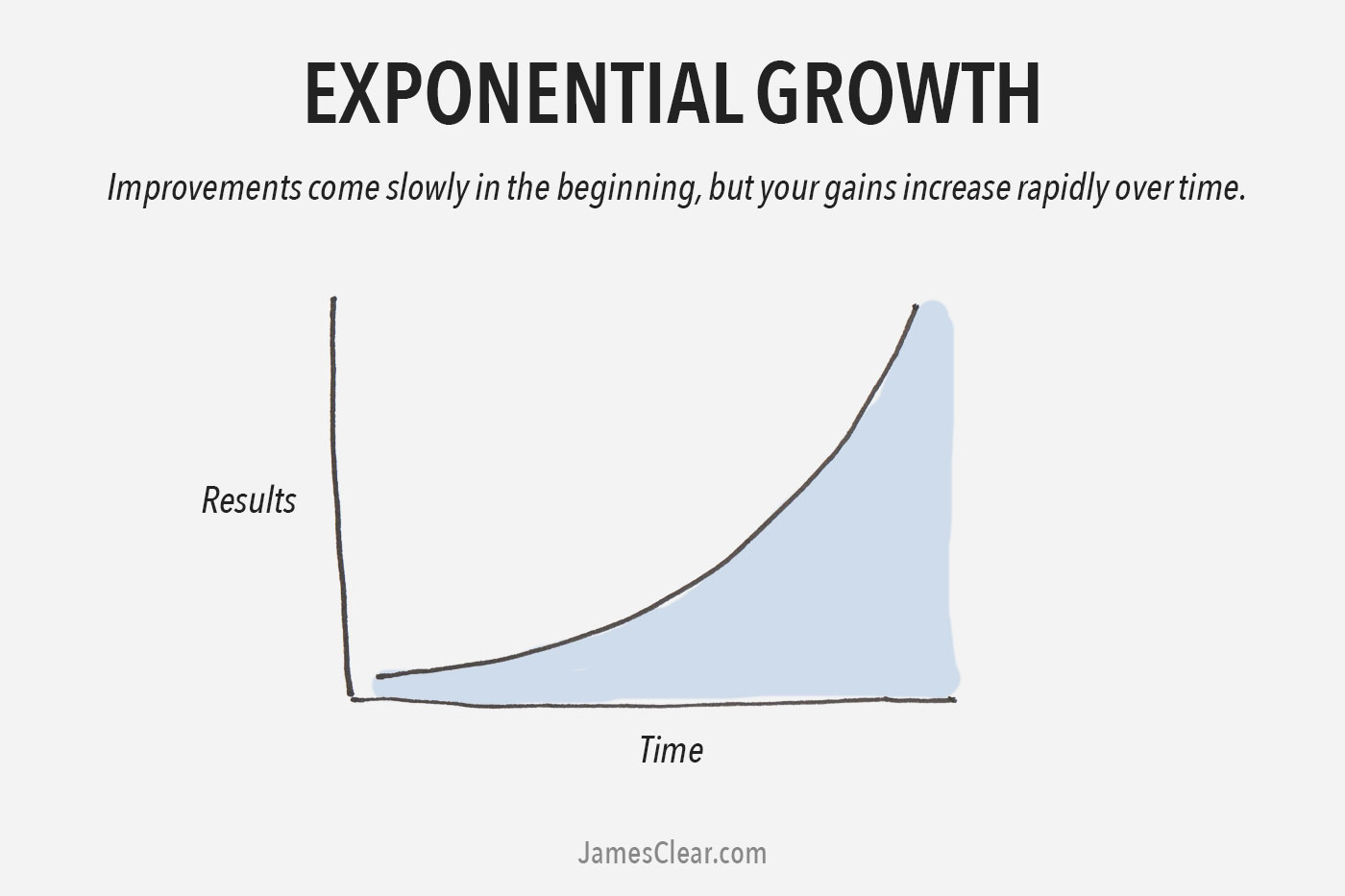
On week 1 we were introduced to exponential decay and growth. To educate us about these topics we went to 4 out of 5 stations to begin. Each station went over something different. 

Every student got to choose between station 1 and station 5. I chose the stations as followed:
- Station 2: M&M Activity: Fish Population Lab: Exponential Decay/Growth Activity.
- Station 3: April Showers Bring May Flowers
- Station 4: Exponential Applet Investigations
- Station 5: Investigate Instagrok on Exponential Functions

Each station had learning goals and when we were done we got stamps.

We now have a better understanding of exponential decay and growth due to these stations!

Friday, March 11, 2016

March 10th, 2016

During class on March 10th, we spent the entire day working on our exponential regression homework.
An example of how to do this would be to put the information into the lists and run an exponential regression. This will bring up a bunch of numbers.
A= starting value
B= rate of change
X= time
This means that if there was 1000 bugs and half of them die a day, the equation would be: 1000(.5)^x
If you were trying to find out how many bugs there would be in 3 days you would do: 1000(.5)^3 which is 125.

Here is a picture of what your calculator should look like when you run an exponential regression.

Thursday, March 10, 2016

March 9, 2016 Exponential Growth and Decay


We did some exponential growth and exponential decay problems. The lab we did that day was an analysis over a case involving a woman suing McDonald's because they heated their coffee too long and she burned herself with it. In the lab, we used our calculators and typed the two sets of data into lists and then ran an exponential regression. After running the regression, we drew out a graph and analyzed it. Then, we configured how long anyone would have to wait until the coffee was cool enough to not cause serious damage if it spilled on them.
http://algebratesthelper.com/function-types/exponential-growth-and-decay/

Wednesday, March 9, 2016

What we learned today.

Today in class we began to talk about how to interpret exponential models so that if not all of the variables are given we can know what to do to solve for A, and B. Step 1 is to substitute values into the equation to get a system of equations. Step 2 is divide the equations. Step 3 is substitute the value of your B variable into the equations. Basically we learned how to find A and B in the equations Y=a(b)^x. That is all. -Matt, 03/08/16


In Class 3/9/16

Today in class we figured out a real life problem. We were given a worksheet with all of the information, but the problem was also online. This was the information we were given:


We then answered the following questions.


This assignment helped us learn how to use our calculators to figure out exponential regression problems. We were able to enter our data and analyze the graph that it created.

Tuesday, March 8, 2016

3 / 8 / 16

Today in class we took notes over Exponential Models.

This is a picture of the notes I took today in class:


We learned how to find "a" and "b" in an exponential equation when we only had data points.

It takes three steps to do this:
  1. Substitute the values from the problem into the equation y = ab^x
  2. Divide the equation with the smaller exponent by the equation with the larger exponent and solve for b.
  3. Substitute the b value back into the equation from step 1 with the smallest exponent and solve for a. 

3/7/16

3/7/16
By: Erynn

- - - - - - - - - - - - - - - - - - - - - - - - - - - - - - - - - - - - - - - - - - - - - - - - - - - - - - - - - - - - - - - - - 

To start class, we took an exponential growth and decay quiz. This took up a majority of the class, so we only had about 20 minutes left to take notes.

- - - - - - - - - - - - - - - - - - - - - - - - - - - - - - - - - - - - - - - - - - - - - - - - - - - - - - - - - - - - - - - - - 

Our notes were about the basic information of exponential functions. 

This equation was given to us…
f(x)=b^x
b= base and is positive and not 1

There were also graphs shown, but the photos are unavailable at this time.

- - - - - - - - - - - - - - - - - - - - - - - - - - - - - - - - - - - - - - - - - - - - - - - - - - - - - - - - - - - - - - - - - 

The second part of our notes consisted of information about graph transformations. I will list the most important review and rules we learned…

y=a*b^k(x-d) +c

a= vertical stretch/compression
c= vertical shift up or down
k= horizontal stretch/compression
d= horizontal shift left or right
*if there is a negative sign in front of the a then it reflects over the x-axis
*if there is a negative sign in front of the k then it reflects over the y-axis


- - - - - - - - - - - - - - - - - - - - - - - - - - - - - - - - - - - - - - - - - - - - - - - - - - - - - - - - - - - - - - - - - 


http://hotmath.com/hotmath_help/topics/graphing-quadratic-equations-using-transformations.html

Monday, March 7, 2016

Class


On Friday, March 4th, 2016 the precalculus class during period F got to take a field trip out in the hallway for a bouncy ball lab. Each group of two or three got the pick what type of ball they wanted to test. There were tennis balls (old and new), a black bouncy ball, a shiny bouncy ball, a golf ball, etc. Each group went out into the hallway and had the tallest person in the group raise their arm as high as they could with the ball of their choice and then we put a sticky note there to mark it. From there, the ball was dropped and caught at a different height (about half of what the height was before) and was marked by a sticky note again, and was repeated multiple times. Then, we went back into the classroom and calculated some results from the exponential decay of our lab and found out that the average decay rate was somewhere about .58.

Station #3

Last week we were required to attend 4 stations around the room to learn about exponential decay and growth. 
I am choosing to elaborate on station 3. 
In this station we had to complete 4 word problems. These word problems were something like 80 milligrams of pain reliever loses 40% of its strength every hour it is in your system. How much remains in your system 2 hours after to take the pill. The starting amount is 80, the decay percent is .4 so your equation would be A=80(0.60)^x. 
This means that after 2 hours, 28.8 milligrams are left in your system. 

Wednesday, March 2, 2016

Station #2

Last week our class had to choose between 5 stations to complete. I choose to to do station #2 which was the M&M activity.

Station #2 taught about exponential growth and exponential decay. The station used M&M's as fish and the plate as the lake. I put 44 M&M's into a cup and poured them onto the plate, I then counted how many m's are facing upward and take those out. I then repeat the process until I no longer have any M&M's. This test shows how and what exponential decay is.


The second test, tested that of exponential growth. I took 2 M&M's in a cup and poured them onto the table. I took M&M's that were M side up and added that many more M&M's to the cup.


  This is the function that we have been learning over the past couple days.

We did a station to practice to help exponential decay and growth.

We used MM and Skittles that where uses as fishes.  I picked skittles because I wanted to taste the rainbow.  We pored the skittles on a plate and all the skittles that had the S facing up wear dead.  We did this ten times.

Then we used our equation and found out the that it was exponential decay.


https://www.google.com/search?q=exponential+growth+formula&espv=2&biw=1024&bih=509&source=lnms&tbm=isch&sa=X&ved=0ahUKEwj08uWH2aLLAhUkhYMKHQH0CiUQ_AUIBigB#tbm=isch&q=taste+the+rainbow&imgdii=hooVOoCzLfs_-M%3A%3BhooVOoCzLfs_-M%3A%3BnTU409PTGgltPM%3A&imgrc=hooVOoCzLfs_-M%3A

Fishy Fishy Expo missy

By Briar

Last week we had to choose from 5 stations and do work on each station. I will elaborate on station 2.

Station 2 was all about exponential growth and exponential decay. This station used fish as a demonstration to show how the exponential growth and exponential decay works. A person had use a bag of M&Ms or Skittles and dope them on a plate. Then you counted the amount a recorded. Then you would put the M&Ms in a cup and dump them onto the plate. Any M&Ms with the M facing up were considered deceased. You placed them aside then repeated. Eventually there were no "fish" left. This was showing exponential decay. The other part of station two was to show exponential growth. You had to dump two M&Ms onto the plate and how ever many Ms were facing up was how much you added into the cup. Then you would dump again and keep adding. Eventually, all the fish we on the plate.


www.TigerfishPUTMEDOWNPUTMEDOWNOUTMEDOWNGRAAAAAAAAAAYYYYIEEEEEEEAAAAARRGGHHH.com ...


Fish Pond Station

By Kerri

Last week one of the stations I did was called the fish pond. In this station I used M&Ms to model exponential growth and decay.


To model exponential decay:
I removed all the M&M's that were not M side up every time I poured them out onto a paper plate. The amount of M&M's on the paper plate decreased by about half every time. 


To model exponential growth:
I started with two M&M's and added more depending upon how many landed M side up. The amount of M&M's on the paper plate increased every time.


Something Smells Fishy.

My favorite station was station 2 because it was very interactive and also it had to do with candy! It really helped teach the class about exponential growth and decay and have real life examples of where it takes place. We had to dump out skittles/M&Ms into a cup and then dump them out and the ones that landed with the logo were dead and we had to take them out and record it, Then repeat until all of our "fish" were dead.  Then we did the opposite to show growth in a pond over years.
BY: Matt

Station #2: Fish Pond

Station 2
By: Emma

Last week we went around to four different stations to complete exponential function problems. At the second station, we used either skittles or M&M’s to collect data. This activity was called the Fish Pond activity, to illustrate the growth and decay of the number of fish in a pond. 

First, we recorded the number of Skittles we had. Then we placed the Skittles in a cup, shook them around, and dumped them out onto a plate. We removed all of the Skittles that had the “S” facing down and place the remaining Skittles into the cup. We repeated this until we ran out of Skittles or we had made eight attempts. 

After collecting the data, we answered some questions about the data we had collected and graphed that date. We then came up with an equation and drew that on the graph in a different color to see the difference between the data we collected and our equation. That was an example of exponential decay. 

We then collected data in an exponential growth pattern by  placing some Skittles into the cup, shaking them, and tossing them onto the plate. However many Skittles had the “S” facing up, was the number of Skittles we added. Each toss, more Skittles were added because there were more Skittles with the “S” facing upward. Once again, we answered some questions, plotted our points on the graph, came up with an equation, and compared.

"Let It Grow"


Last week we were asked to go to various stations that connected to exponential equations and one that I had chosen was the April Showers Bring May Flowers station (Station 3). I actually really liked this station. In this station, I had to choose four word problems and find the equation, the starting amount, the rate of change, and the answer to the word problem. For example, one of the problems I chose was question 3 that said: Your 2500 gallon pool has sprung a leak and loses 70% every 10 minutes. How much water will remain in the pool after 30 minutes. The starting amount was 2500, the decay rate or rate of change was 70% and the equation was y=2500(.93)^(x/10). The answer I found, after plugging the following equation (y=2500(.93)^(30/10)) into my calculator was 2010.90 gallons.

"Exponential Growth and Decay Word Problems | Algebra II | Khan Academy." YouTube. YouTube, n.d. Web. 01 Mar. 2016. 

Last Weeks Table Fun :)

Last week we had several assignments we needed to complete.  Their were stations around the room that and we had to finish four.  All the assignments had to do with exponential functions, both growth and decay.  We were either creating problems or looking at real world problems. 

Heres the exponential function: 

My favorite station was the Fish in a pond one.  We simulated a fish environment using m&m's as the fish.  In one simulation the ones with the m's up died while the other lived (exponential decay).  In other other the ones that had the m's up had fish babies (exponential growth).

This is fish I caught:
 
www.fly-fishing-discounters.com

This is an m&m that died (RIP):

www.sodahead.com

Last Week's PreCalc "Fun"


Station #5
By: Erin

SUMMARY ABOUT LAST WEEK'S LEARNINGS 
Particularly focusing on Station #5

- - - - - - - - - - - - - - - - - - - - - - - - - - - - - - - - - - - - - - - - - - - - - - - - - - - - - - - - - - - - - - - - - - - - -


The above image is the most important formula I believe 
I learned from the past week as it is used in every 
equation whether it is for exponential growth or 
exponential decay. 

- - - - - - - - - - - - - - - - - - - - - - - - - - - - - - - - - - - - - - - - - - - - - - - - - - - - - - - - - - - - - - - - - - - - -

Last week we went around in stations and did a variety of different exercises that all related back to exponential growth or decay. 

The station I have decided to blog about is Station #5. 

In this station, we went online to the "instagrok" site and investigated to help us better learn about exponential growth or decay.

We had to take notes or make examples on five different categories that were available on the site. Those categories included key facts, websites, videos, images, and concepts. 

Below you will find my five papers that I designed and took notes over. 

The blue/pink paper was from the video; the red/blue paper was from an image; the green/yellow paper was from key facts; the pink/purple paper was from websites; and the orange/purple paper was from concepts

By doing this station, it helped me better my knowledge about exponential growth and decay. I now have a better understanding about it thanks to the help of good ole Station #5.